Gateway to the World: A City Built on Trade
As you ride from the harbor to the town hall, you are traversing the path of tea, carpets, spices, and coffee that made this city wealthy.
Table of Contents
Hammaburg to Hanseatic Power
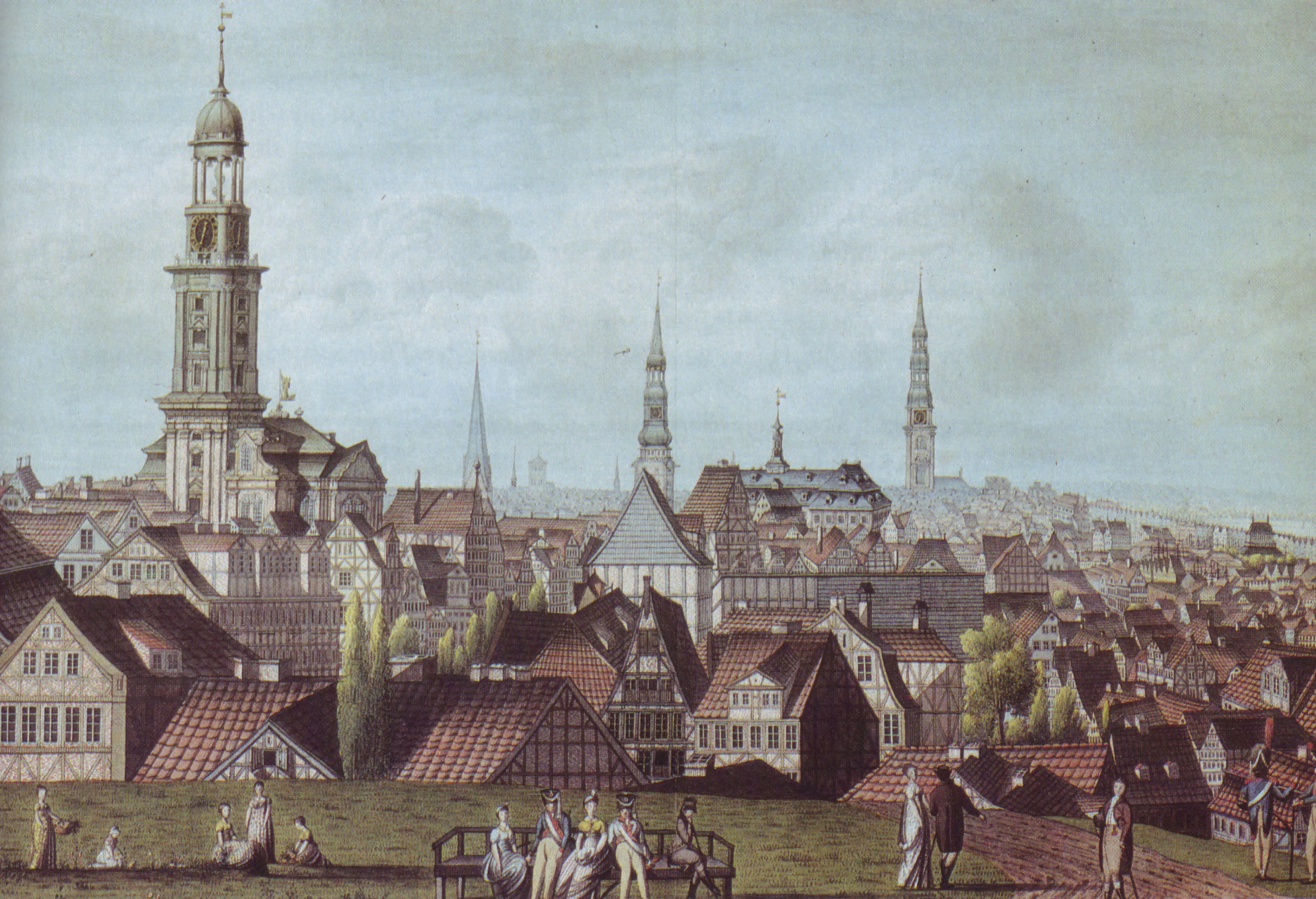
Your journey begins in spirit at the 'Hammaburg', a moated castle from the 9th century that gave the city its name, though no trace remains today. As your bus passes the Rathausmarkt, you are at the center of what became a medieval powerhouse. In the 12th century, Emperor Barbarossa granted Hamburg a charter that allowed duty-free trade up and down the Elbe to the North Sea. This act was the spark that ignited Hamburg's rise.
Joining the Hanseatic League, a powerful defensive confederation of merchant guilds, Hamburg became a key player in Northern European trade. As you look at the majestic Town Hall from the bus, imagine the 'Pfeffersäcke' (pepper sacks)—the wealthy merchants—who ruled this city-state with an iron grip, valuing independence and commerce above all else. They built a city that owed allegiance to no king, only to its own prosperity, a spirit of autonomy that you can still feel in the Hamburg Senate today.
The Great Fire of 1842
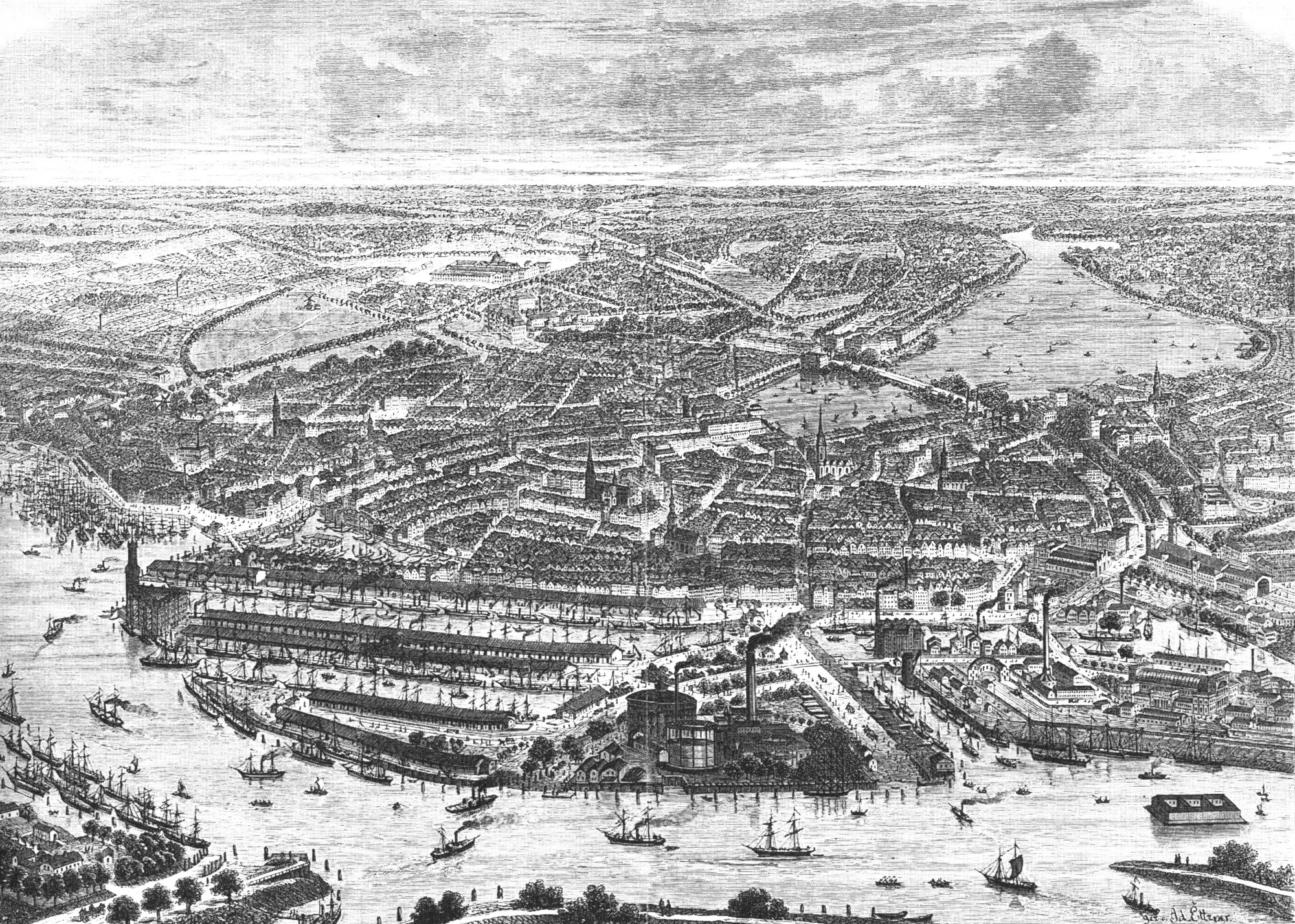
While driving past the ruined tower of St. Nicholas Church (Mahnmal St. Nikolai), you touch upon a recurring theme in Hamburg's history: destruction and rebirth. In May 1842, a fire broke out in a cigar factory and raged for four days. It consumed about a third of the inner city, including the old town hall and three major churches. The 'Great Fire' left thousands homeless and destroyed the medieval heart of the town.
However, the pragmatic citizens saw an opportunity. The reconstruction led to the creation of the modern sewer system (the first in continental Europe) and the structured, elegant cityscape around the Alster arcades that you admire from the bus today. The calamity modernized the city, sweeping away the cramped, unsanitary medieval alleys and replacing them with the broad, white classical lines of the Alsterarkaden.
Cholera and the 'Gängeviertel'
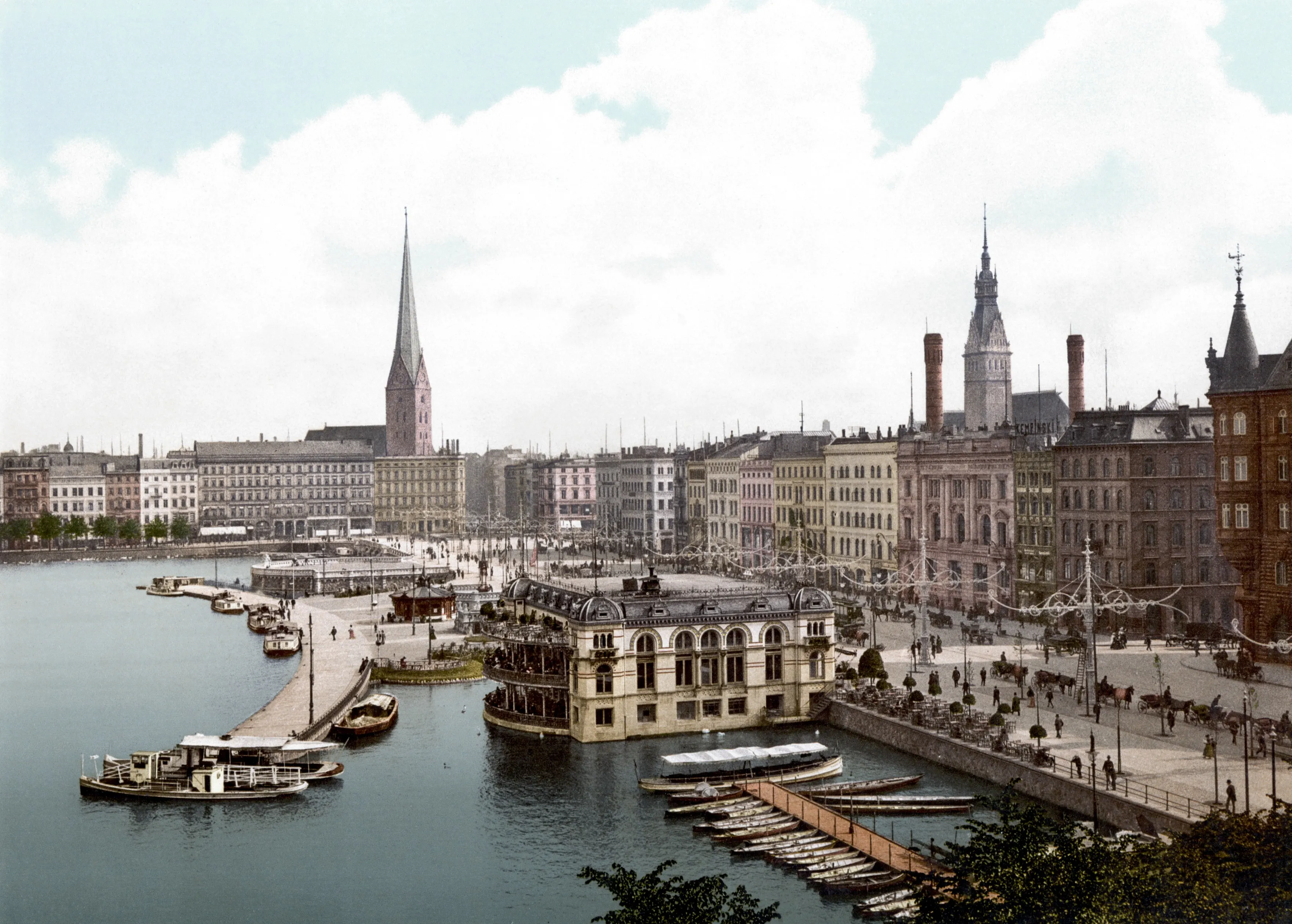
As you pass close to the Neustadt, the audio guide might mention the 'Gängeviertel' (Alley Quarters). Until the late 19th century, this was a densely packed slum of timber-framed houses where the poor lived in squalor. In 1892, a devastating Cholera epidemic broke out—the last major one in a Western European city—killing over 8,000 people. It exposed the stark inequality between the wealthy merchant villas and the harbor workers' slums.
The shock of the epidemic led to massive urban clearance. The city tore down the narrow alleys to create space, light, and better hygiene. The grand boulevards like Mönckebergstraße, which you might drive along or near, were cut through these former slum areas, transforming the city center into a commercial showpiece while pushing the working class further out.
The Warehouse District: Speicherstadt
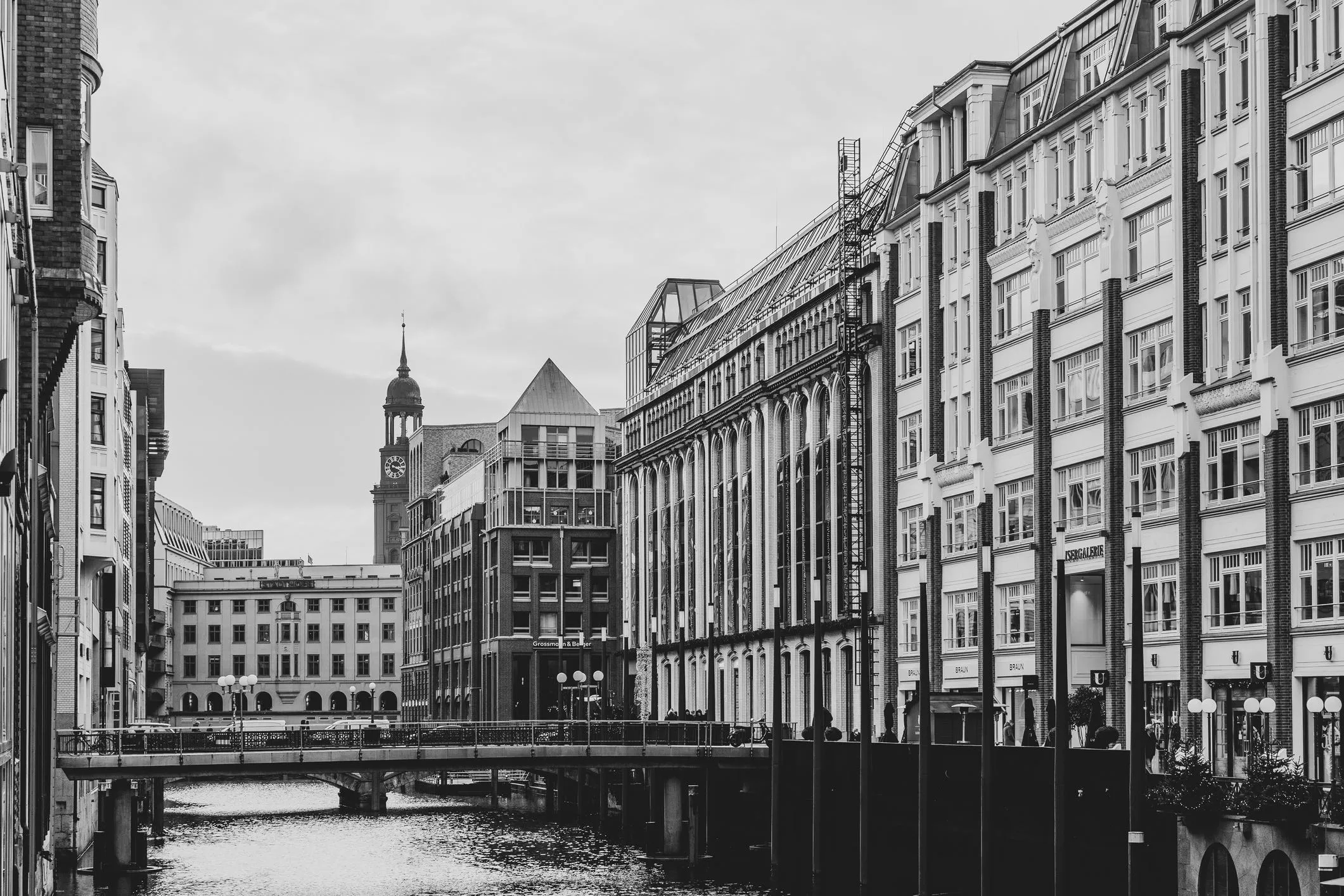
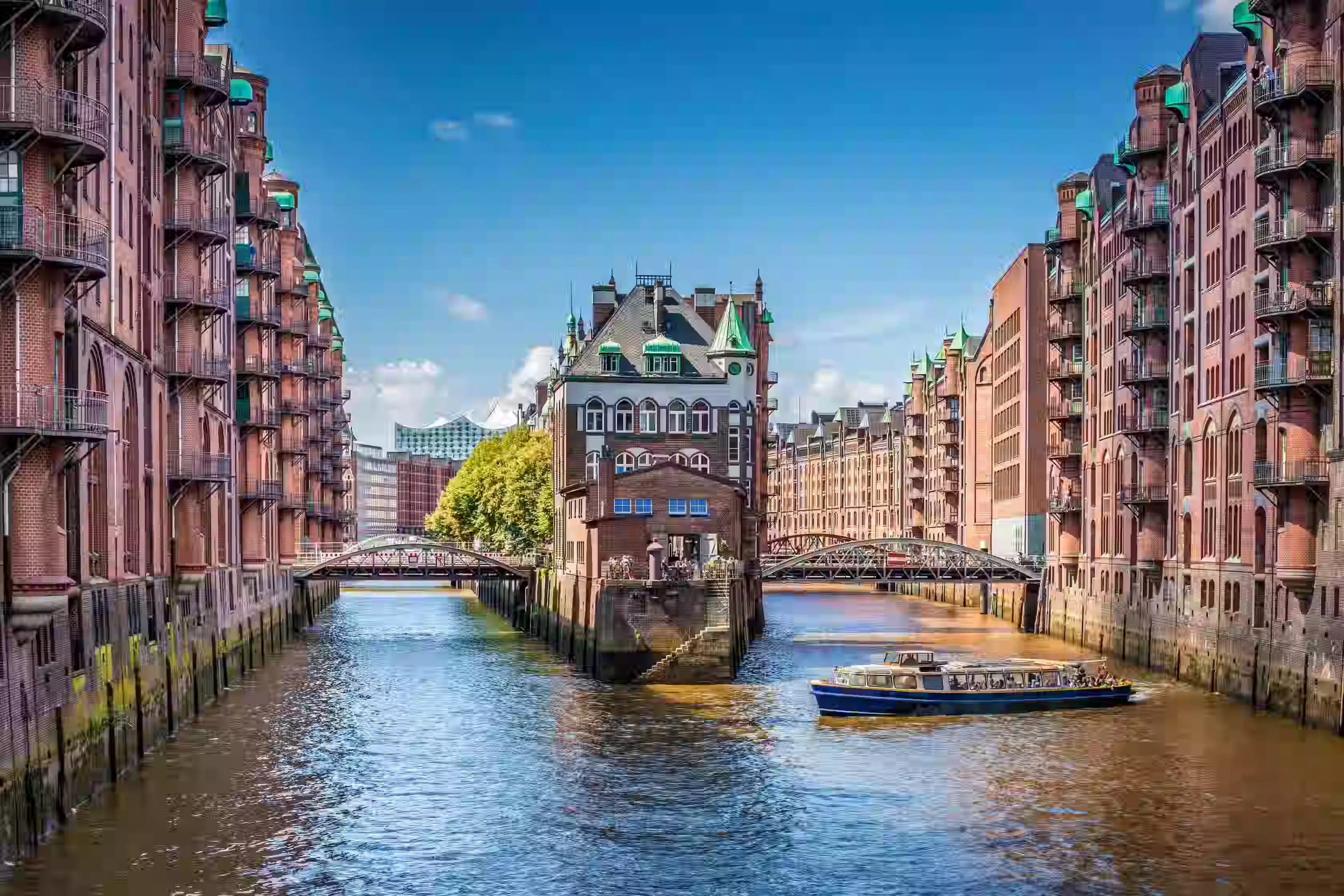
One of the absolute highlights of the bus tour is the Speicherstadt. Built between 1883 and 1927, this is the largest warehouse district in the world, standing on thousands of oak piles driven into the mud. It was created as a free economic zone where goods could be stored without paying customs duties. The neo-Gothic red brick architecture, with its turrets and gables, makes the warehouses look more like cathedrals of commerce than storage depots.
As you drive through the cobbled streets, notice the winches on the gables. These were used to hoist carpets, coffee, cocoa, and spices directly from the barges in the canals up into the storage lofts. Today, the smell of roasted coffee still lingers in some corners, but the buildings now house museums, agencies, and dungeons. It is a UNESCO World Heritage site that beautifully illustrates Hamburg's identity as a 'Storehouse of the World'.
Emigration: BallinStadt & The World
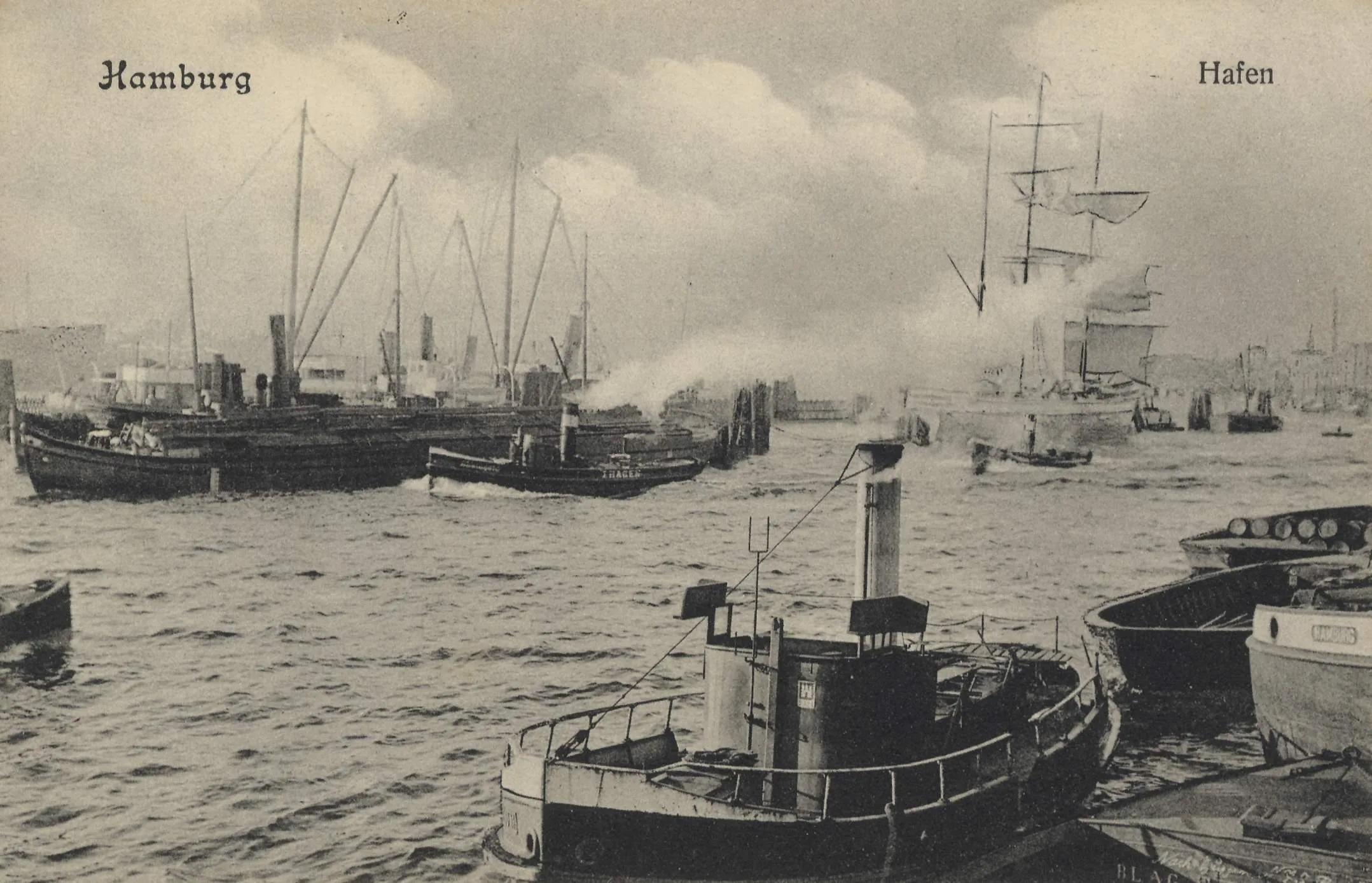
For over 5 million people between 1850 and 1934, Hamburg was the 'Gateway to the World' not because of what came in, but because it was their way out. The bus route near the harbor connects you to the story of European emigrants leaving for the Americas. Albert Ballin, the director of the HAPAG shipping line, built the 'Emigrant Halls' (BallinStadt) to house thousands of people waiting for their passage, providing them with food, medical checks, and clean accommodation.
This mass movement shaped the city's infrastructure and its international character. Hamburg became a transit zone for hopes and dreams. Although the BallinStadt museum is a bit further out, the piers at Landungsbrücken where the bus stops are the very places where these journey began. Looking at the water, you can almost see the ghosts of steamships past, carrying millions to a new life across the Atlantic.
Operation Gomorrah: WWII Destruction
Hamburg's history has a dark and tragic chapter that is essential to understanding the modern cityscape. In July 1943, Allied forces launched 'Operation Gomorrah', a series of devastating air raids. The resulting firestorm largely destroyed the eastern districts like Hammerbrook and Rothenburgsort, killing tens of thousands of civilians and leaving the city in ruins. The spire of St. Nikolai, which you see on the tour, was left as a hollow ruin to serve as a memorial and a warning against war.
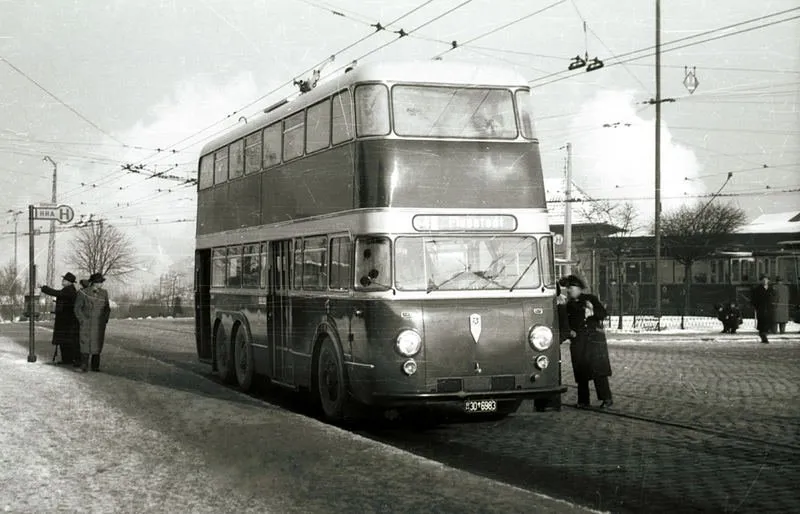
As your bus drives through the city center and the harbor, you will notice the mix of historic reconstruction and functional post-war architecture. Unlike some other cities that rebuilt their old towns exactly as they were, Hamburg often chose modern planning. The rapid rebuilding in the 1950s and 60s is a testament to the citizens' will to survive and recover, earning Hamburg the reputation of a Phoenix rising from the ashes.
The Beatles in St. Pauli
On a lighter note, as the bus cruises down the Reeperbahn, you are entering rock 'n' roll territory. In the early 1960s, a group of scruffy lads from Liverpool came to Hamburg to play in the gritty clubs of St. Pauli like the Indra, the Kaiserkeller, and the Star-Club. John Lennon famously said, 'I was born in Liverpool, but I grew up in Hamburg.'
The brutal schedule of playing 8 hours a night forged the Beatles into a tight professional band. The district vividly remembers this connection with the Beatles-Platz, a square designed like a vinyl record with metal silhouettes of the band members. Hopping off here lets you trace their footsteps, visit the old club locations, and feel the raw energy that still pulses through this entertainment district.
The Flood of 1962
Water is Hamburg's friend but also its threat. In February 1962, a severe storm surge broke the dikes, flooding one-sixth of the city and taking over 300 lives. It was a catastrophe that showcased the leadership of then-Senator Helmut Schmidt, who coordinated the rescue efforts decisively. The flood changed how Hamburg protects itself.
As you drive along the harbor and the Elbe, notice the high flood protection walls and the massive floodgates. The city is now a fortress against the tides. The modern promenades like the one at Landungsbrücken or the new HafenCity are built with this flood protection integrated into their design—terraced layouts that allow the water to rise without harming the buildings. It's engineering born from tragedy.
HafenCity & Elbphilharmonie
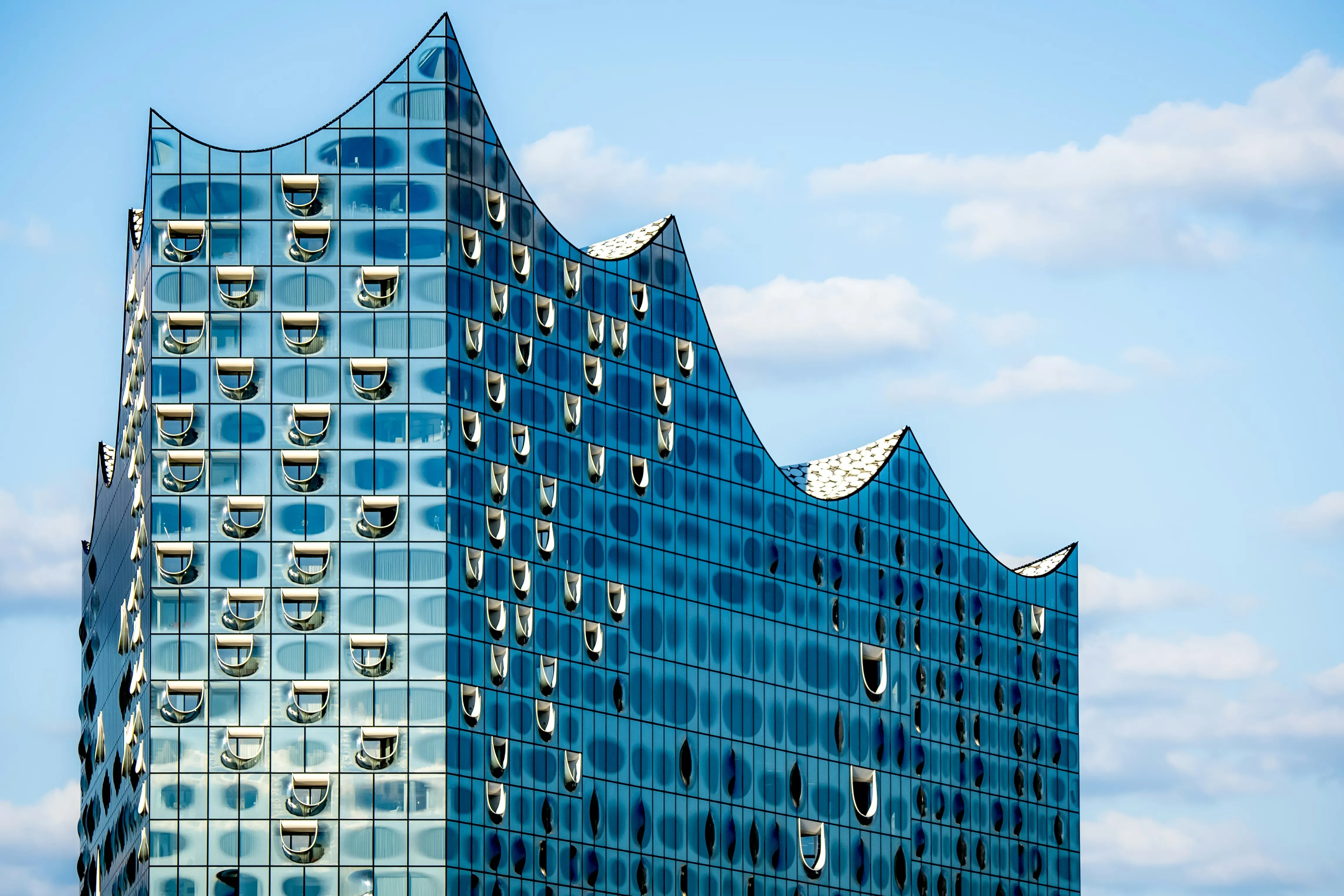
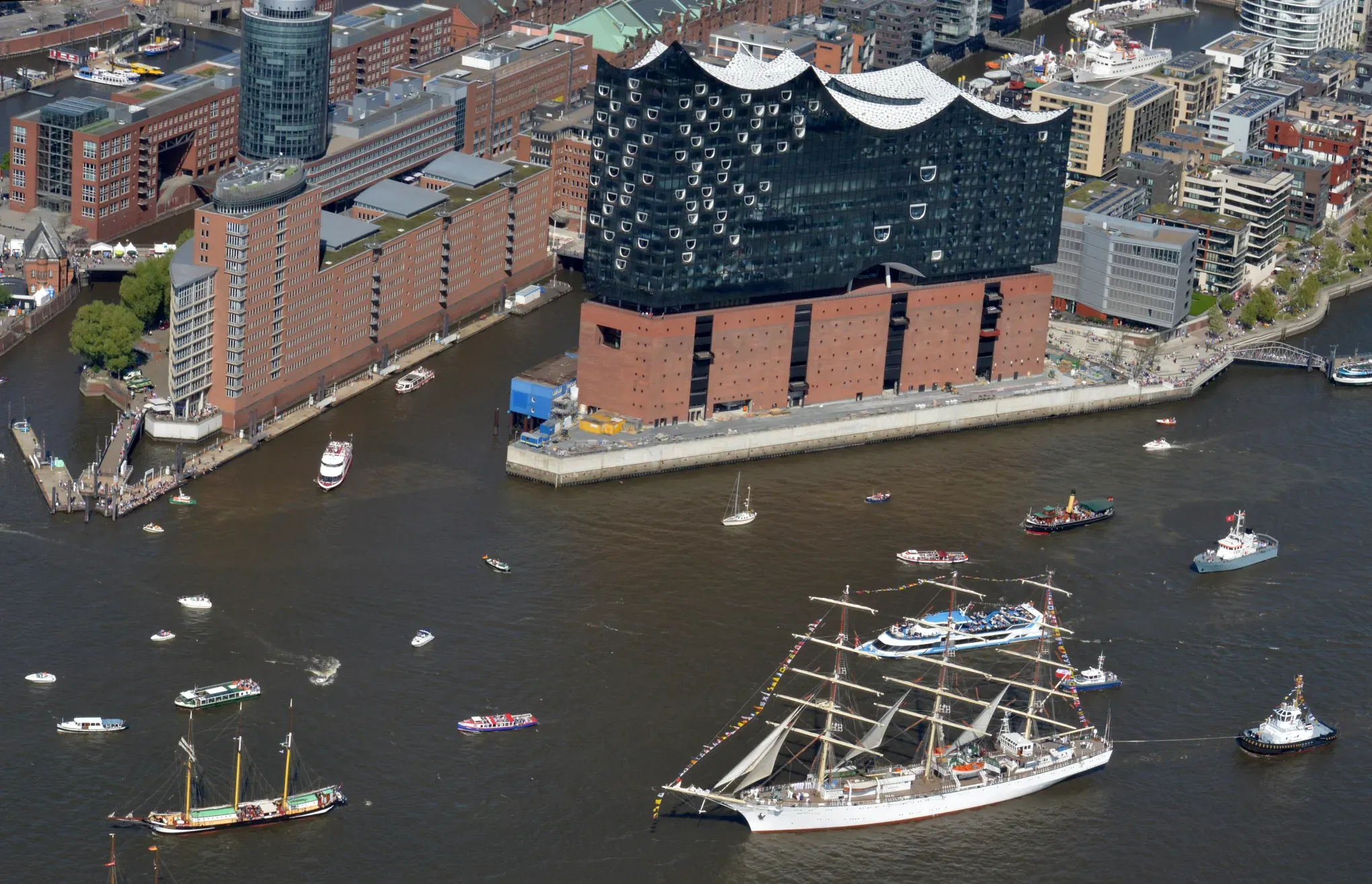
Your tour inevitably highlights the contrast between the old brick Speicherstadt and the brand-new HafenCity. This is Europe's largest inner-city urban development project, expanding the city center by 40% into former port areas. The crown jewel is the Elbphilharmonie, locally known as 'Elphi'. Built on top of an old cocoa warehouse, its glass facade resembles waves or sails.
The project was plagued by delays and cost explosions, becoming a controversial topic for years. But since its opening, it has become the new landmark of Hamburg, embraced by locals and visitors alike. From the bus, its silhouette dominates the skyline. Visiting the public plaza offers a stunning 360-degree view, symbolizing Hamburg's ambition to be a modern cultural capital while literally resting on its trading past.
Modern Hamburg: Media & Green City
Beyond the harbor, the bus takes you to the 'Green Hamburg'. The city is incredibly lush, with the Planten un Blomen park, the Stadtpark, and the Alster lakes serving as the city's lungs. Hamburg was the European Green Capital in 2011, a recognition of its environmental efforts. It's also Germany's media capital, home to major publishing houses like Spiegel and Zeit, often housed in impressive modern glass buildings you might pass.
This northern part of the route—Rotherbaum and Harvestehude—is where the old merchant money lives. The white Art Nouveau villas and consulates show a different face of wealth compared to the rugged harbor. It's a quiet, leafy world of sailing clubs and expensive cars, proving that Hamburg is not just a working-class port city but also one of Germany's wealthiest municipalities.
The Port: Heart of the City
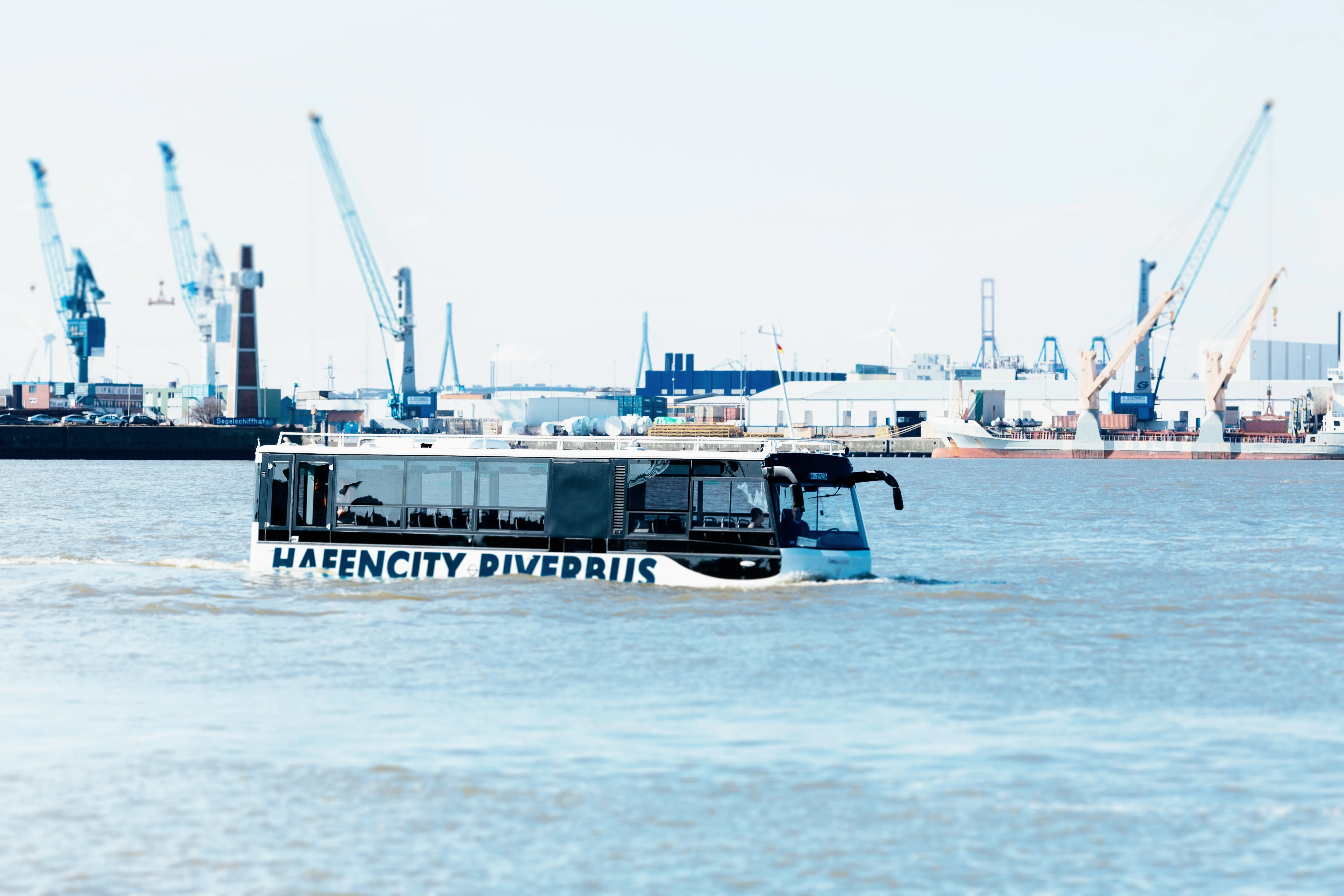
Throughout the loop, the presence of the port is constant. It is the third-largest port in Europe and the economic engine of the region. Even from the bus, you can see the forest of cranes and the stacks of colorful containers. The port is 'tidal', meaning ships must calculate their arrival with the Elbe's tides.
The 'Gateway to the World' is more than a slogan; it's a reality of logistics. Coffee, carpets, electronics—chances are they entered Europe through here. The annual 'Hafengeburtstag' (Port Birthday) helps celebrate this heritage with a massive festival. For a visitor, seeing a container ship the size of an apartment block glide past the Landungsbrücken is an awe-inspiring reminder of global trade scales.
Alternative Hamburg: The Sternschanze
Near the fairgrounds and the TV tower, the bus grazes the Sternschanze district. This was historically a defensive fortification ('Schanze'), but today it's the center of alternative culture and left-wing activism. The 'Rote Flora', a former theater now a squat, is a symbol of resistance against gentrification.
While the bus might not drive through the narrowest streets, the vibe here spills over. It's a colorful, graffiti-covered contrast to the orderly city center. It reminds you that Hamburg has a rebellious streak, valued freedom, and a history of civil disobedience that runs as deep as its mercantile conservatism.
Why a bus ride reveals the layers
A hop-on hop-off bus in Hamburg is a time machine. In one loop, you travel from the 9th-century roots to the 19th-century industrial boom, through the destruction of the 1940s, the pop-culture explosion of the 60s, and into the 21st-century future of the HafenCity.
The city's layout, dictated by the Elbe and the Alster, means that these eras are geographically distinct yet connected by bridges and boulevards. As you hop off to smell the fish at the market or the roses in the park, you are experiencing the diverse layers of a city that has always looked outward to the horizon. It's a city of proud citizens, 'Hanseaten', who welcome you with a nod and a 'Moin'—short, practical, but warm.
Table of Contents
Hammaburg to Hanseatic Power
Your journey begins in spirit at the 'Hammaburg', a moated castle from the 9th century that gave the city its name, though no trace remains today. As your bus passes the Rathausmarkt, you are at the center of what became a medieval powerhouse. In the 12th century, Emperor Barbarossa granted Hamburg a charter that allowed duty-free trade up and down the Elbe to the North Sea. This act was the spark that ignited Hamburg's rise.
Joining the Hanseatic League, a powerful defensive confederation of merchant guilds, Hamburg became a key player in Northern European trade. As you look at the majestic Town Hall from the bus, imagine the 'Pfeffersäcke' (pepper sacks)—the wealthy merchants—who ruled this city-state with an iron grip, valuing independence and commerce above all else. They built a city that owed allegiance to no king, only to its own prosperity, a spirit of autonomy that you can still feel in the Hamburg Senate today.
The Great Fire of 1842
While driving past the ruined tower of St. Nicholas Church (Mahnmal St. Nikolai), you touch upon a recurring theme in Hamburg's history: destruction and rebirth. In May 1842, a fire broke out in a cigar factory and raged for four days. It consumed about a third of the inner city, including the old town hall and three major churches. The 'Great Fire' left thousands homeless and destroyed the medieval heart of the town.
However, the pragmatic citizens saw an opportunity. The reconstruction led to the creation of the modern sewer system (the first in continental Europe) and the structured, elegant cityscape around the Alster arcades that you admire from the bus today. The calamity modernized the city, sweeping away the cramped, unsanitary medieval alleys and replacing them with the broad, white classical lines of the Alsterarkaden.
Cholera and the 'Gängeviertel'
As you pass close to the Neustadt, the audio guide might mention the 'Gängeviertel' (Alley Quarters). Until the late 19th century, this was a densely packed slum of timber-framed houses where the poor lived in squalor. In 1892, a devastating Cholera epidemic broke out—the last major one in a Western European city—killing over 8,000 people. It exposed the stark inequality between the wealthy merchant villas and the harbor workers' slums.
The shock of the epidemic led to massive urban clearance. The city tore down the narrow alleys to create space, light, and better hygiene. The grand boulevards like Mönckebergstraße, which you might drive along or near, were cut through these former slum areas, transforming the city center into a commercial showpiece while pushing the working class further out.
The Warehouse District: Speicherstadt
One of the absolute highlights of the bus tour is the Speicherstadt. Built between 1883 and 1927, this is the largest warehouse district in the world, standing on thousands of oak piles driven into the mud. It was created as a free economic zone where goods could be stored without paying customs duties. The neo-Gothic red brick architecture, with its turrets and gables, makes the warehouses look more like cathedrals of commerce than storage depots.
As you drive through the cobbled streets, notice the winches on the gables. These were used to hoist carpets, coffee, cocoa, and spices directly from the barges in the canals up into the storage lofts. Today, the smell of roasted coffee still lingers in some corners, but the buildings now house museums, agencies, and dungeons. It is a UNESCO World Heritage site that beautifully illustrates Hamburg's identity as a 'Storehouse of the World'.
Emigration: BallinStadt & The World
For over 5 million people between 1850 and 1934, Hamburg was the 'Gateway to the World' not because of what came in, but because it was their way out. The bus route near the harbor connects you to the story of European emigrants leaving for the Americas. Albert Ballin, the director of the HAPAG shipping line, built the 'Emigrant Halls' (BallinStadt) to house thousands of people waiting for their passage, providing them with food, medical checks, and clean accommodation.
This mass movement shaped the city's infrastructure and its international character. Hamburg became a transit zone for hopes and dreams. Although the BallinStadt museum is a bit further out, the piers at Landungsbrücken where the bus stops are the very places where these journey began. Looking at the water, you can almost see the ghosts of steamships past, carrying millions to a new life across the Atlantic.
Operation Gomorrah: WWII Destruction
Hamburg's history has a dark and tragic chapter that is essential to understanding the modern cityscape. In July 1943, Allied forces launched 'Operation Gomorrah', a series of devastating air raids. The resulting firestorm largely destroyed the eastern districts like Hammerbrook and Rothenburgsort, killing tens of thousands of civilians and leaving the city in ruins. The spire of St. Nikolai, which you see on the tour, was left as a hollow ruin to serve as a memorial and a warning against war.
As your bus drives through the city center and the harbor, you will notice the mix of historic reconstruction and functional post-war architecture. Unlike some other cities that rebuilt their old towns exactly as they were, Hamburg often chose modern planning. The rapid rebuilding in the 1950s and 60s is a testament to the citizens' will to survive and recover, earning Hamburg the reputation of a Phoenix rising from the ashes.
The Beatles in St. Pauli
On a lighter note, as the bus cruises down the Reeperbahn, you are entering rock 'n' roll territory. In the early 1960s, a group of scruffy lads from Liverpool came to Hamburg to play in the gritty clubs of St. Pauli like the Indra, the Kaiserkeller, and the Star-Club. John Lennon famously said, 'I was born in Liverpool, but I grew up in Hamburg.'
The brutal schedule of playing 8 hours a night forged the Beatles into a tight professional band. The district vividly remembers this connection with the Beatles-Platz, a square designed like a vinyl record with metal silhouettes of the band members. Hopping off here lets you trace their footsteps, visit the old club locations, and feel the raw energy that still pulses through this entertainment district.
The Flood of 1962
Water is Hamburg's friend but also its threat. In February 1962, a severe storm surge broke the dikes, flooding one-sixth of the city and taking over 300 lives. It was a catastrophe that showcased the leadership of then-Senator Helmut Schmidt, who coordinated the rescue efforts decisively. The flood changed how Hamburg protects itself.
As you drive along the harbor and the Elbe, notice the high flood protection walls and the massive floodgates. The city is now a fortress against the tides. The modern promenades like the one at Landungsbrücken or the new HafenCity are built with this flood protection integrated into their design—terraced layouts that allow the water to rise without harming the buildings. It's engineering born from tragedy.
HafenCity & Elbphilharmonie
Your tour inevitably highlights the contrast between the old brick Speicherstadt and the brand-new HafenCity. This is Europe's largest inner-city urban development project, expanding the city center by 40% into former port areas. The crown jewel is the Elbphilharmonie, locally known as 'Elphi'. Built on top of an old cocoa warehouse, its glass facade resembles waves or sails.
The project was plagued by delays and cost explosions, becoming a controversial topic for years. But since its opening, it has become the new landmark of Hamburg, embraced by locals and visitors alike. From the bus, its silhouette dominates the skyline. Visiting the public plaza offers a stunning 360-degree view, symbolizing Hamburg's ambition to be a modern cultural capital while literally resting on its trading past.
Modern Hamburg: Media & Green City
Beyond the harbor, the bus takes you to the 'Green Hamburg'. The city is incredibly lush, with the Planten un Blomen park, the Stadtpark, and the Alster lakes serving as the city's lungs. Hamburg was the European Green Capital in 2011, a recognition of its environmental efforts. It's also Germany's media capital, home to major publishing houses like Spiegel and Zeit, often housed in impressive modern glass buildings you might pass.
This northern part of the route—Rotherbaum and Harvestehude—is where the old merchant money lives. The white Art Nouveau villas and consulates show a different face of wealth compared to the rugged harbor. It's a quiet, leafy world of sailing clubs and expensive cars, proving that Hamburg is not just a working-class port city but also one of Germany's wealthiest municipalities.
The Port: Heart of the City
Throughout the loop, the presence of the port is constant. It is the third-largest port in Europe and the economic engine of the region. Even from the bus, you can see the forest of cranes and the stacks of colorful containers. The port is 'tidal', meaning ships must calculate their arrival with the Elbe's tides.
The 'Gateway to the World' is more than a slogan; it's a reality of logistics. Coffee, carpets, electronics—chances are they entered Europe through here. The annual 'Hafengeburtstag' (Port Birthday) helps celebrate this heritage with a massive festival. For a visitor, seeing a container ship the size of an apartment block glide past the Landungsbrücken is an awe-inspiring reminder of global trade scales.
Alternative Hamburg: The Sternschanze
Near the fairgrounds and the TV tower, the bus grazes the Sternschanze district. This was historically a defensive fortification ('Schanze'), but today it's the center of alternative culture and left-wing activism. The 'Rote Flora', a former theater now a squat, is a symbol of resistance against gentrification.
While the bus might not drive through the narrowest streets, the vibe here spills over. It's a colorful, graffiti-covered contrast to the orderly city center. It reminds you that Hamburg has a rebellious streak, valued freedom, and a history of civil disobedience that runs as deep as its mercantile conservatism.
Why a bus ride reveals the layers
A hop-on hop-off bus in Hamburg is a time machine. In one loop, you travel from the 9th-century roots to the 19th-century industrial boom, through the destruction of the 1940s, the pop-culture explosion of the 60s, and into the 21st-century future of the HafenCity.
The city's layout, dictated by the Elbe and the Alster, means that these eras are geographically distinct yet connected by bridges and boulevards. As you hop off to smell the fish at the market or the roses in the park, you are experiencing the diverse layers of a city that has always looked outward to the horizon. It's a city of proud citizens, 'Hanseaten', who welcome you with a nod and a 'Moin'—short, practical, but warm.